
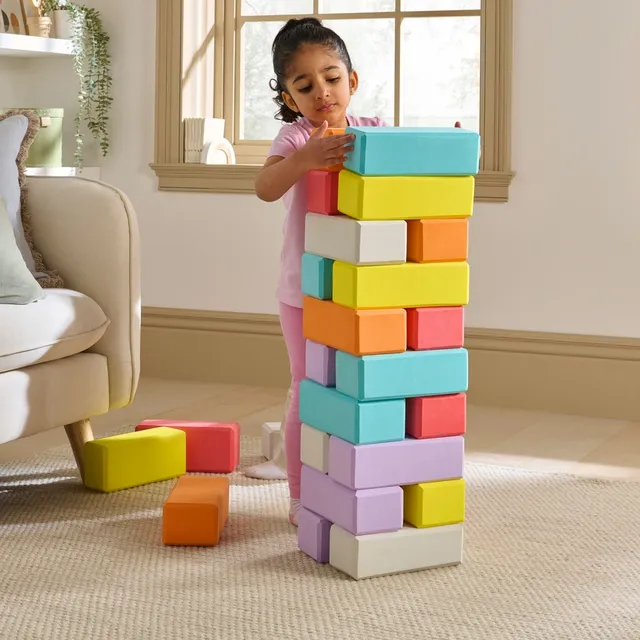
Giant Building Blocks can turn an ordinary room into an exciting playground for imaginative exploration. Giant Building Blocks encourage children to construct towers, tunnels, forts, bridges, and pretend cities while creating their own stories and adventures. With Giant Building Blocks, children can enjoy hands-on activities that combine movement, creativity, and problem-solving. Whether used at home, in a classroom, or in a childcare setting, Giant Building Blocks provide an adaptable way to keep kids engaged when outdoor adventures are not possible.
Why Indoor Adventures Matter for Kids
Children need opportunities to move, explore, imagine, and experiment throughout the day. When rain, cold weather, or other circumstances keep them indoors, it can be challenging to find activities that remain interesting for long periods.
Large construction toys provide an excellent solution because they can be used in numerous ways. Instead of completing the same activity repeatedly, children can transform their building area into a different environment every time they play.
Turning a Room Into a Playground
A clear section of a playroom or classroom can become an adventure zone. Children might construct a mountain, cave, castle, or space station using oversized construction pieces.
The physical process of carrying, stacking, arranging, and connecting pieces adds movement to indoor play. This makes construction more active than many traditional seated activities while still encouraging focused creative thinking.
Exploring With Giant Building Blocks
Giant Building Blocks are particularly useful for open-ended play because they do not require children to follow one specific design. Kids can decide what they want to build and change their ideas as they go.
A simple collection of large blocks might first become a tall tower and later transform into a pretend fire station. The ability to rebuild encourages experimentation and gives children freedom to explore different possibilities. For more information about large building blocks for kids, explore their features, benefits, age suitability, and role in encouraging imaginative and educational play.
Building a Fort
A fort is one of the simplest indoor adventures children can create. They can arrange large blocks to form walls, entrances, and separate sections.
Once the fort is complete, it can become a secret headquarters, explorer's cabin, pirate ship, or royal castle. Adding soft blankets, stuffed animals, or age-appropriate toys can make the pretend environment even more engaging.
Creative Adventure Ideas for Kids
There are countless ways to use Giant Building Blocks during indoor play. Parents and educators can introduce a theme when children need inspiration, while still allowing them to make their own creative decisions.
Create an Indoor City
Children can construct buildings, roads, bridges, garages, shops, and other parts of an imaginary city. Toy cars and figures can become residents and travelers.
This activity can encourage children to think about how communities are organized. They can decide where roads should go, where buildings should stand, and how different areas connect.
Design a Space Station
A space-themed construction challenge can take indoor play to another level. Children can build a launch station, control room, sleeping area, or imaginary spacecraft.
They can then create a story about astronauts exploring a distant planet. This combination of construction, role-playing, and storytelling supports imagination while introducing simple concepts related to space and science.
Build a Jungle Adventure
Large blocks can become bridges, caves, animal shelters, or jungle checkpoints. Children can use toy animals to create an imaginary expedition.
The activity can encourage storytelling and vocabulary as children describe what they discover during their pretend adventure.
Developmental Benefits of Construction Play
Giant Building Blocks offer more than entertainment. Hands-on construction can support several areas of childhood development.
Problem-Solving and Critical Thinking
Building structures requires children to make decisions. They need to determine where pieces should go and what changes might improve stability.
When a tower falls, children have an opportunity to analyze what happened and try a different approach. This teaches persistence and encourages practical problem-solving.
Coordination and Spatial Awareness
Picking up and positioning large pieces requires hand-eye coordination. Children also learn how objects relate to one another as they arrange pieces into structures.
They begin to understand concepts such as height, width, balance, distance, position, and shape through direct experience.
Communication and Teamwork
Construction can become a cooperative activity when several children participate. They can divide tasks, exchange ideas, and work toward a shared goal.
These interactions can strengthen communication and social skills. Children learn that successful group projects often require listening, sharing, patience, and compromise.
Making Indoor Adventures More Interactive
Adults can make Giant Building Blocks even more engaging by introducing simple missions and challenges. Instead of telling children exactly what to build, provide a creative goal.
For example, ask them to build a bridge that connects two areas, create a shelter for toy animals, or construct a castle with several rooms.
Adventure Storytelling
Storytelling can give a purpose to construction. Once children build a structure, ask them who lives there, what happens inside, and what adventure is about to begin.
This encourages children to use their imagination while developing language and narrative skills. The structure becomes a setting for an ongoing story rather than simply a finished construction project.
Creating a Safe Indoor Building Area
Safety is an important consideration whenever children are using large construction pieces. The play area should provide enough open space for children to move around without bumping into furniture or fragile objects.
Parents and caregivers should select age-appropriate products and inspect pieces regularly for cracks, damage, or sharp edges.
Encouraging Safe Building Habits
Children should learn to carry large pieces carefully and place them rather than throwing them. They should also understand that unstable structures should not be climbed unless the product is specifically designed for that purpose.
Supervision is especially important for younger children. A well-organized play area can allow kids to explore creatively while reducing unnecessary hazards.
Choosing the Right Construction Set
When selecting Giant Building Blocks, parents should consider several factors. The size of the pieces should be appropriate for the children's age and abilities.
Material is also important. Lightweight pieces may be easier for younger children to handle, while durable construction materials can be useful in classrooms and busy childcare environments.
Size and Quantity
The number of pieces can influence the types of structures children can create. A smaller collection may be sufficient for individual play, while larger groups may benefit from having many pieces available.
Storage should also be considered. Oversized blocks require more space than traditional building toys, so a dedicated storage container, shelf, or playroom area can make organization easier.
Extending the Adventure With Learning
Giant Building Blocks can be incorporated into educational activities without taking away from the fun. Parents can introduce counting games, color sorting, shape identification, and simple measurement challenges.
Children might count how many pieces they used to build a tower or compare two structures to determine which one is taller.
Introducing Early Engineering Concepts
Adults can introduce simple engineering questions during construction. Ask children why one structure is stable and another falls over, or challenge them to create a stronger base.
These questions encourage observation, experimentation, and logical reasoning. Children learn through trial and error while remaining actively involved in the activity.
Keeping Kids Interested Over Time
One advantage of Giant Building Blocks is their ability to support repeated play. Since the pieces can be rearranged into different designs, children do not have to use them in the same way every time.
Parents can rotate themes throughout the week. Monday might feature a castle challenge, Tuesday could involve building a city, and another day could focus on creating a pretend transportation center.
This variety helps maintain curiosity and encourages children to continually develop new ideas.
Frequently Asked Questions
1. What are Giant Building Blocks used for?
Giant Building Blocks can be used to create towers, forts, houses, bridges, tunnels, cities, castles, vehicles, and imaginative play environments.
2. Are Giant Building Blocks good for indoor adventures?
Yes. They can transform an open indoor space into a creative adventure area where children can combine construction, movement, storytelling, and pretend play.
3. What skills can children develop through construction play?
Construction activities can support coordination, spatial awareness, creativity, planning, problem-solving, communication, teamwork, and early STEM understanding.
4. Can several children play with Giant Building Blocks together?
Yes. Collaborative building gives children opportunities to communicate, share materials, negotiate ideas, and work together toward a common goal.
5. How can parents make indoor building activities more exciting?
Parents can introduce themes such as space exploration, jungle adventures, castles, rescue missions, or imaginary cities. Storytelling and toy accessories can further expand the play experience.
Conclusion
Giant Building Blocks provide children with an exciting way to turn indoor spaces into places of discovery and adventure. From building forts and castles to designing cities and space stations, these versatile construction pieces encourage children to think creatively and explore their own ideas. They also provide opportunities to practice coordination, problem-solving, communication, spatial reasoning, and teamwork. With creative themes, age-appropriate materials, and a safe building area, Giant Building Blocks can keep children actively engaged while transforming everyday indoor play into memorable adventures.